

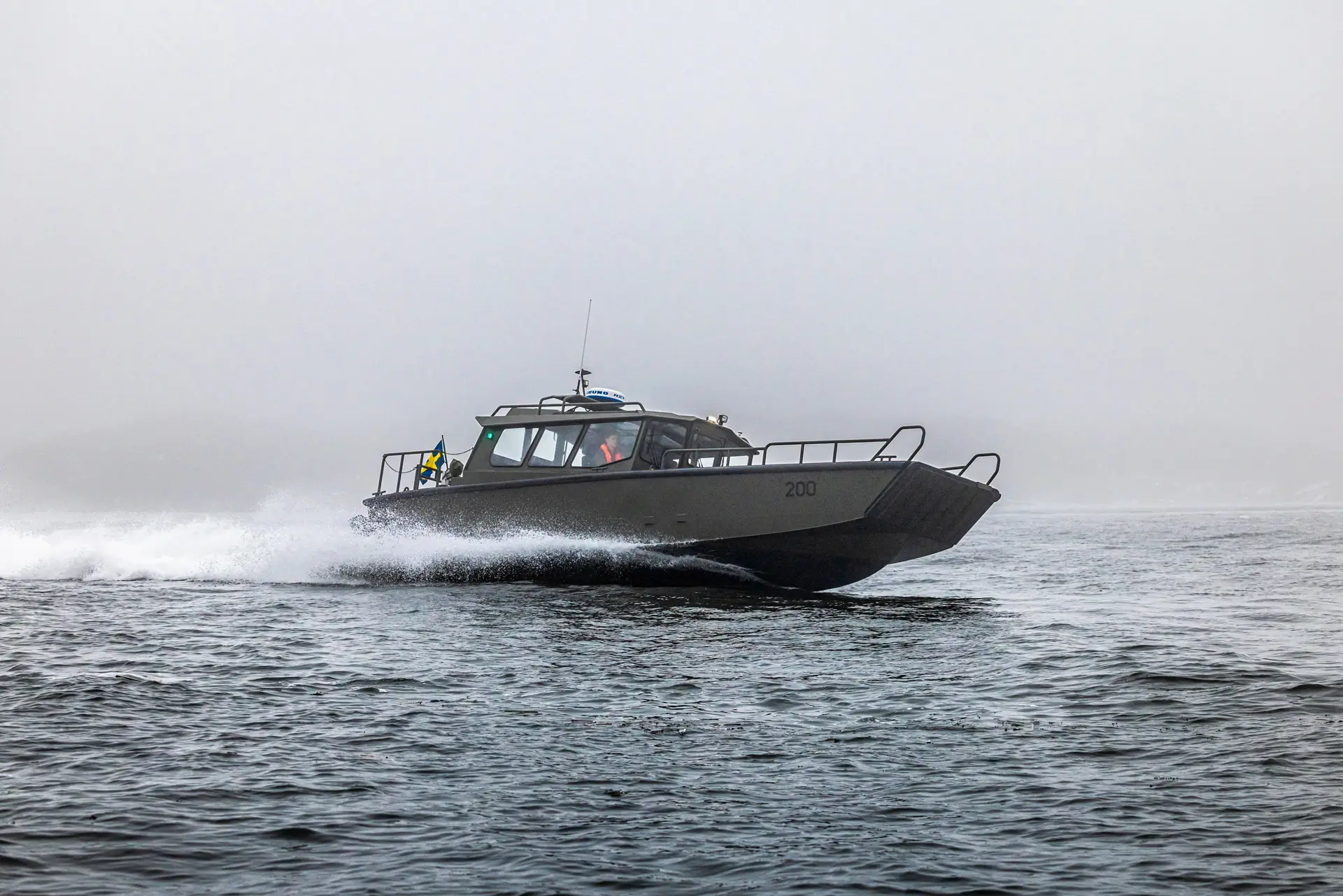
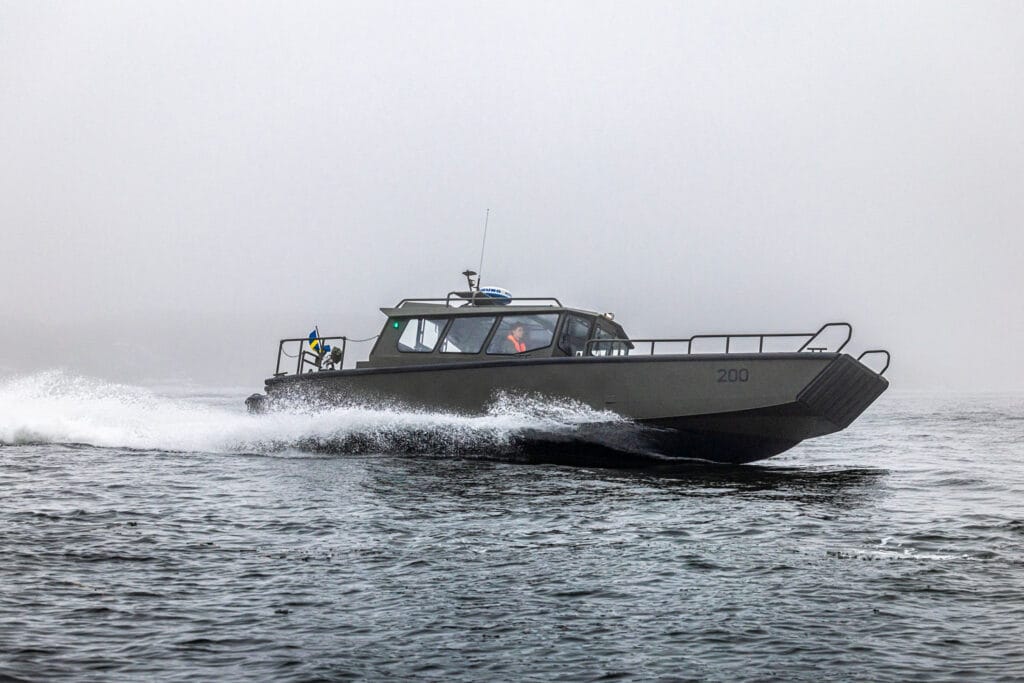
When the Swedish Defence Materiel Administration (FMV) required a new type of boat for transportation in archipelago environments, Svekon and Nimbus Group were awarded the contract to develop and deliver the solution. The result is a militarized boat platform designed to meet high demands in functionality, quality, and operational capability. The MSMB 200 is a standardized platform, meaning that everything from training to spare parts supply is unified, creating greater operational flexibility for the Swedish Armed Forces.
Background
Under the framework agreement, 60 boats are currently planned for delivery, with the option for an additional 40 units, bringing the total potential volume to 100 boats. The MSMB 200 is a light high-speed motorboat developed to transport personnel and equipment in archipelago environments. It is primarily intended for the Home Guard but can also be operated by other military units.
The project was initially based on an existing civilian platform from Nimbus. During development, however, the platform evolved significantly and became, in practice, a new solution adapted to current operational requirements. The boat has been extended, militarized, and modified to meet a comprehensive specification of requirements.
The objective was clear: to develop a robust, standardized, and flexible platform that can be operated in the same way regardless of whether it is deployed in the Gothenburg archipelago or in the Gulf of Bothnia.
”This project is not only about delivering a boat. It is about building a standardized capability for the Swedish Armed Forces.”
John Wittberg – Project Manager, Svekon
The Challange
The project placed high demands on both technical expertise and coordination between multiple stakeholders. The solution needed to fulfill detailed requirements related to dimensions, transportability, functionality, safety, and documentation.
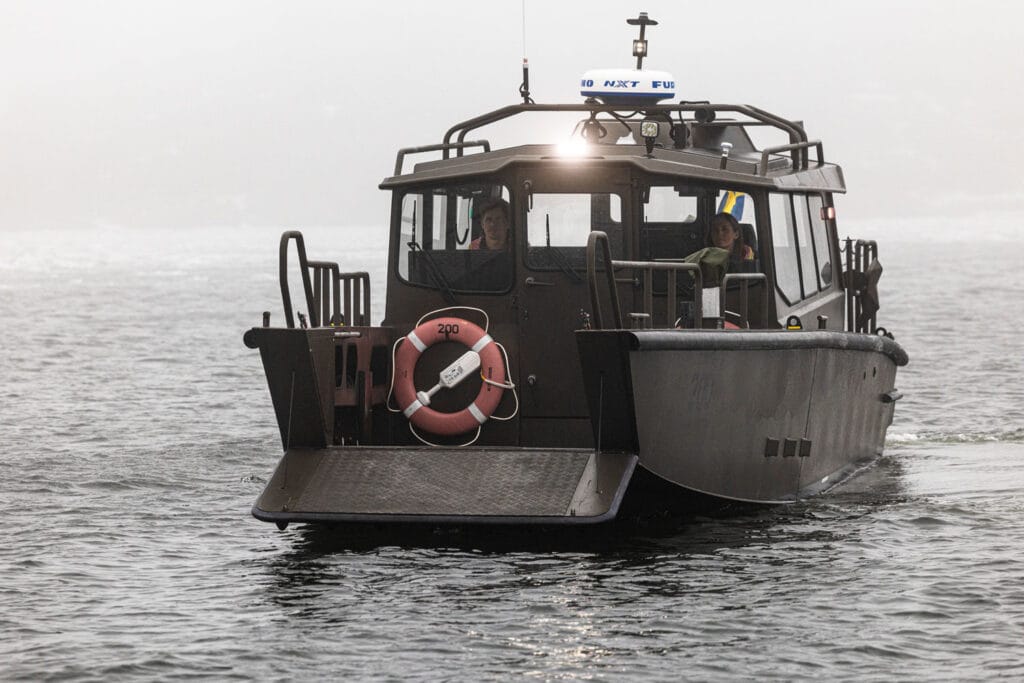
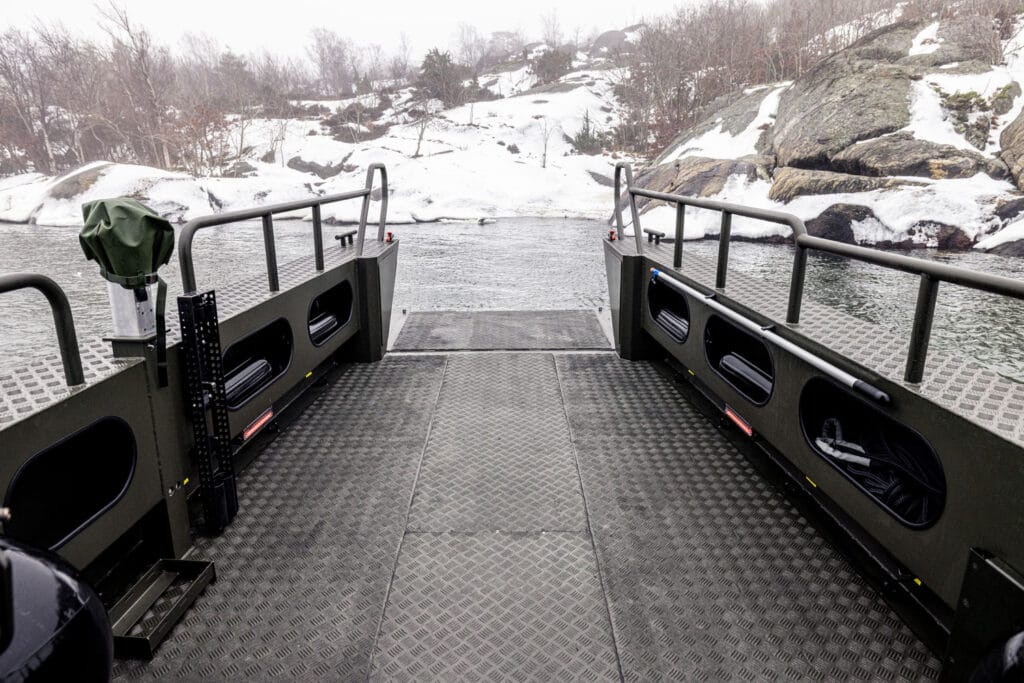
One important requirement was that the boat had to be transportable on public roads without requiring complex permits or special regulations. This made overall length and width critical parameters. At the same time, the platform needed to accommodate a driver and navigator while transporting an additional eight personnel or 1.2 tonnes of cargo — all without compromising performance or usability.
The project was carried out in close collaboration between customer, supplier, and partner organizations. In addition to the platform design itself, the work also included verification, system safety, integrated logistics support, training, and documentation.
Collaboration as an Enabler
The project was conducted in close cooperation with Nimbus Group, responsible for the boat’s design, systems architecture, and production capability. Svekon acted as the coordinating partner, responsible for ensuring that the overall delivery functioned as a complete solution.
The collaboration was characterized by transparency and close dialogue, where challenges were addressed early and solved jointly. This created a working model where the right expertise could be involved at the right time. End users from the Swedish Armed Forces were also involved throughout parts of the process, providing valuable feedback regarding operational use and practical requirements.
”Svekon provides a solid foundation by combining strong collaborative capabilities with a high level of responsiveness, creating strong relationships and efficient results.”
Karin Sundberg – Project Manager, Nimbus Group
Svekon’s Role
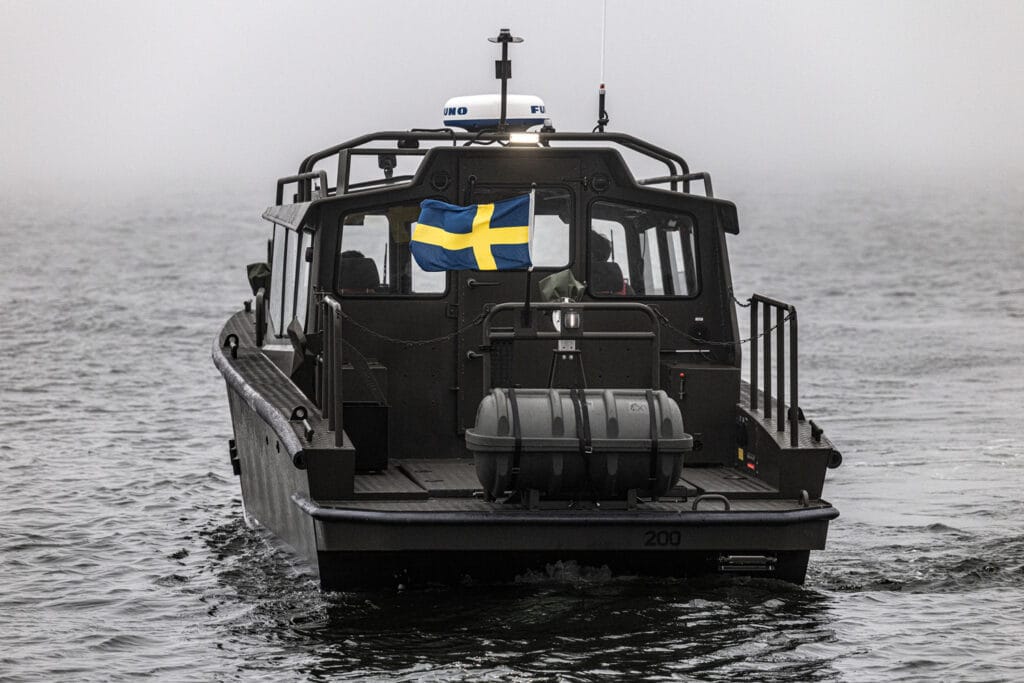
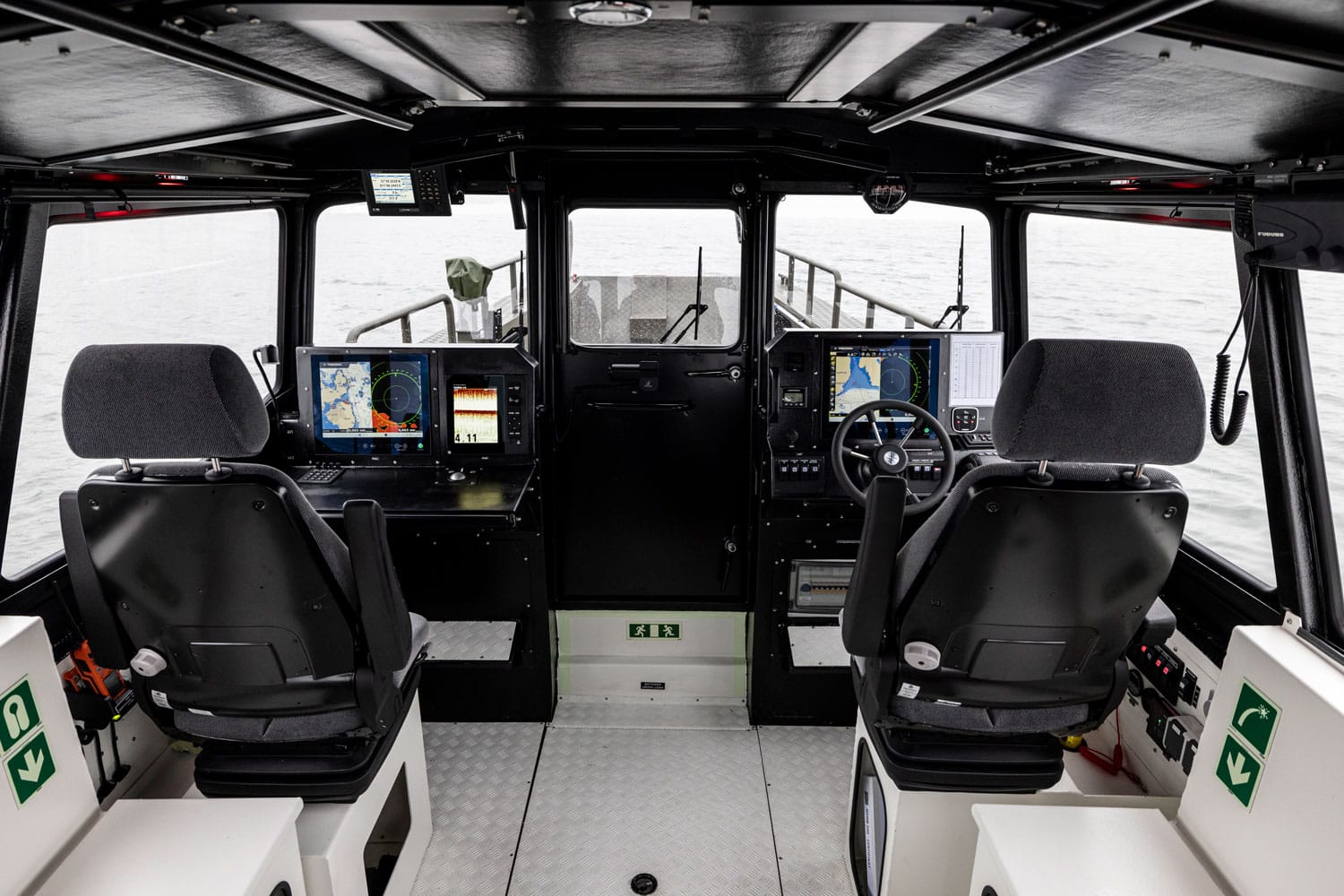
Svekon has played a central role in both project management and technical execution. The assignment included verification management, contributions to system safety and ILS activities, as well as the development of weapon mounting solutions. The boat has been equipped with two weapon pillars, enabling the integration of self-protection support weapons.
A particularly important aspect of the project has been the planning, structuring, and execution of the verification activities. This involved ensuring compliance throughout the entire process — from design reviews to installation checks, harbor testing, and sea trials.
To manage the project complexity, Svekon established regular project meetings with the customer, complemented by dedicated cross-functional technical meetings focused on specific engineering challenges. This approach enabled rapid problem-solving, alignment between stakeholders, and continuous project progress.
Verification in Focus
Verification has been one of the most central aspects of the project. For Svekon, the objective was not to wait for customer inspection, but to proactively demonstrate that the platform fulfilled all agreed requirements through:
- Design reviews
- Installation inspections
- Harbor testing
- Sea trials
- Test reports
- Documented self-inspections
This working method required clear planning, structured test procedures, and close dialogue with both customer and partner organizations to ensure a robust and quality-assured delivery.
Managing Change Without Losing Momentum
As in all development projects, changes occurred throughout the process. One example was when the boat classification changed, resulting in a requirement for a life raft, which in turn required the platform to be extended. Since the change occurred before production had started, it could be managed without major impact on the project, although it required updated stability calculations and additional engineering work.
One important success factor throughout the project has been Svekon’s working methodology: being transparent about risks and challenges, raising issues early, and maintaining focus on solutions. This has contributed to strong trust between all involved parties and enabled the project to manage complexity in a constructive way.
“The important thing is to be transparent about the challenges you face and to continuously focus on solutions.”
John Wittberg, Project Manager – Defence and Security, Svekon
The Result
The project has resulted in a new boat platform adapted to the Swedish Armed Forces’ operational needs and future use. The solution enables a more standardized maritime capability, where the same training and operational procedures can be applied regardless of where in the country the platform is deployed.
This creates several important benefits:
- Greater flexibility in the use of personnel and equipment
- Simplified training and implementation
- Increased standardization between units and geographical regions
- A robust platform designed for real operational requirements
One key lesson from the project is that success is not only dependent on technology, but also on how collaboration is structured and executed. Through close cooperation, clear communication, and a shared focus on solving challenges, the project has maintained momentum despite high demands and evolving requirements.
For Svekon, this is where real value is created — combining technical expertise with structure, collaboration, and a deep understanding of how defence projects must be executed in practice.


